

Introduction
Sexual dysfunction continues to be an enduring clinical challenge, especially when it stems from modifiable lifestyle factors such as nicotine exposure. Nicotine is far more than an addictive stimulant; it is a potent vasoconstrictor, oxidative stress inducer, and endocrine disruptor capable of impairing male reproductive function at multiple physiological levels. Chronic nicotine intake has been consistently linked to reduced libido, altered testosterone homeostasis, impaired spermatogenesis, and endothelial dysfunction. Against this backdrop, renewed scientific attention has turned toward plant-derived therapeutic agents that can counteract the biochemical derailments triggered by tobacco exposure.
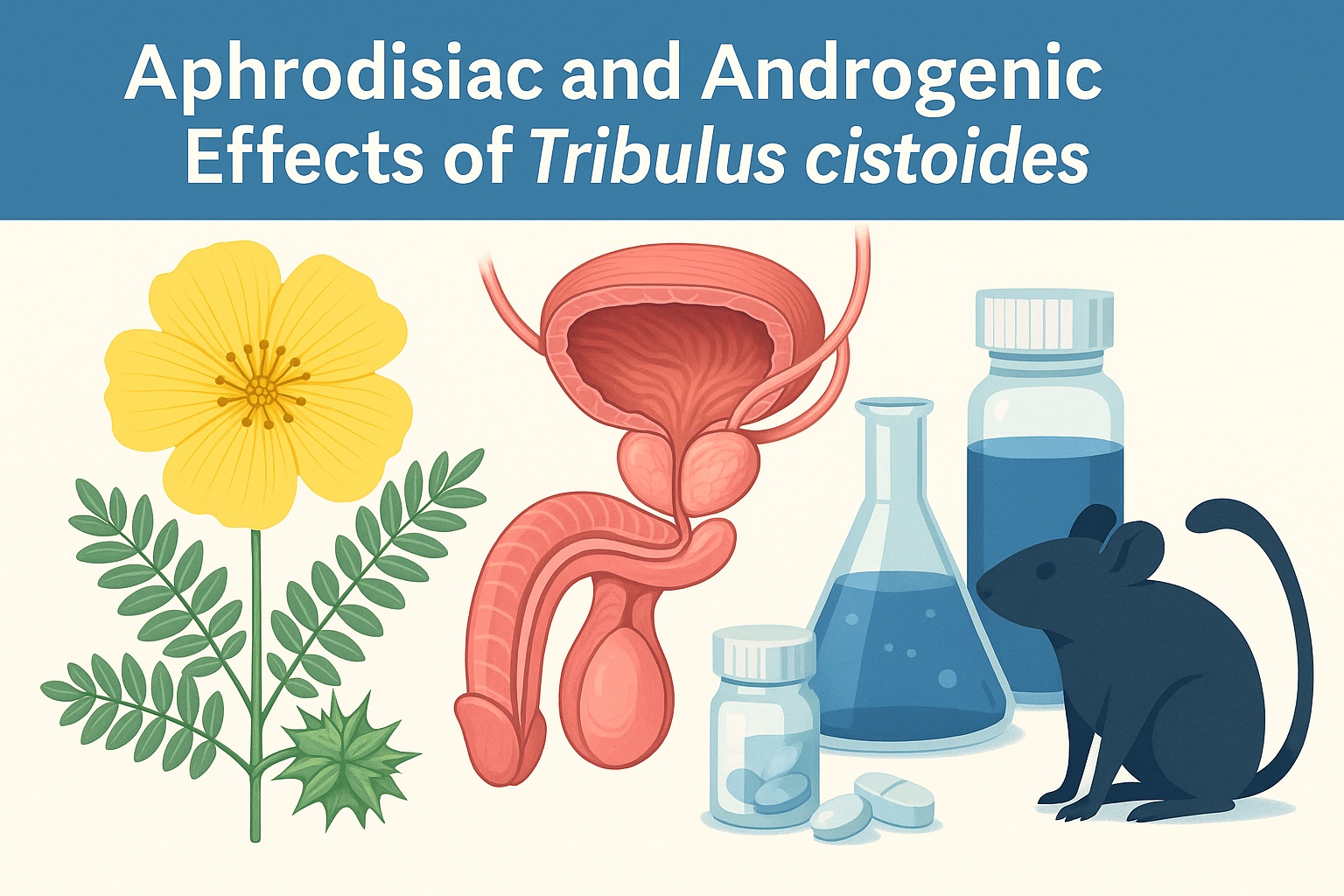
The study summarized in the provided PDF explores precisely such a therapeutic candidate: Tribulus cistoides, a lesser-studied but pharmacologically intriguing species of the Zygophyllaceae family. Historically overshadowed by its botanical relative Tribulus terrestris, T. cistoides emerges in this research as a potentially potent aphrodisiac and androgenic agent capable of mitigating nicotine-induced sexual dysfunction in male Wistar rats . The authors examine both aqueous and ethanol extracts, allowing a clearer interpretation of which phytochemical fractions contribute most strongly to the observed physiological improvements.
The following article examines, in depth, the experimental design, mechanistic rationale, biochemical markers, behavioral analyses, and histological results from the study. It integrates the data into a coherent narrative that highlights not only the therapeutic potential of T. cistoides but also the broader context of nicotine-related sexual dysfunction. A touch of scientific irony naturally arises when a plant frequently overlooked in ethnopharmacology outperforms expectations in a complex endocrine model—reminding us that biology often rewards those who take the time to look beyond the usual suspects.
Nicotine-Induced Sexual Dysfunction: Understanding the Biological Insult
To interpret the findings, one must appreciate the pathophysiological framework of nicotine-induced sexual dysfunction. The study demonstrates, via reference curves and biochemical measurements (pages 4–5), that nicotine disrupts male sexual behavior not by a single mechanism but by a coordinated cascade of vascular, hormonal, and oxidative stress pathways. Nicotine reduces testosterone production through disruptions in the hypothalamic–pituitary–gonadal axis, increases reactive oxygen species that directly damage the testes, and constricts blood vessels supplying reproductive tissues.
These insults appear prominently in the nicotine-only group, where sexual performance parameters—mount frequency, intromission frequency, ejaculation latency, and copulatory efficiency—are significantly diminished. The authors’ tables (pages 6–7) reveal stark reductions in libido and performance metrics, reflecting the combined endocrine and neurovascular impairment. Serum testosterone levels also fall markedly, demonstrating nicotine’s inhibitory effect on Leydig cell steroidogenesis. Such hormonal reductions correlate strongly with behavioral deficits, underscoring the multidimensional nature of sexual dysfunction in this model.
Testicular histology (page 10) further illustrates nicotine’s destructive influence. Seminiferous tubules appear disorganized, germ cells show degenerative changes, and overall spermatogenic density is diminished. Taken together, these markers confirm that nicotine impacts male reproductive physiology at every level—from central neuroendocrine signaling to local testicular architecture and sexual performance.
Against this highly damaging backdrop, the introduction of Tribulus cistoides extracts becomes more than a test of a plant’s traditional reputation; it becomes an assessment of whether a phytomedicine can meaningfully restore function in a severely compromised physiological environment.
Tribulus cistoides: Phytochemical Significance and Expected Mechanisms
The genus Tribulus has a long ethnomedicinal history spanning aphrodisiac, androgenic, and fertility-enhancing uses. T. terrestris has been extensively studied, but T. cistoides, despite belonging to the same botanical family, remains comparatively underexplored. The authors justify their interest in T. cistoides based on its phytochemical composition—rich in saponins, alkaloids, flavonoids, and steroidal glycosides—compounds known to influence androgenic activity, nitric oxide bioavailability, and gonadal perfusion.
Saponins in particular are noteworthy for their role in stimulating luteinizing hormone (LH) release, thereby indirectly enhancing testosterone synthesis. Several steroidal saponins structurally resemble endogenous precursors of testosterone and may act as biochemical amplifiers of Leydig cell activity. Flavonoids, meanwhile, exert strong antioxidant effects, neutralizing reactive oxygen species generated by nicotine exposure. This synergy between endocrine and antioxidant activity provides a plausible pathway through which T. cistoides may counteract sexual dysfunction.
The study’s results reinforce these mechanistic expectations. Both aqueous and ethanol extracts demonstrate androgenic effects, but the ethanol extract—richer in lipid-soluble saponins—delivers more pronounced improvements in sexual behavior and biochemical markers. This aligns with pharmacognostic theory: ethanol extracts often concentrate steroidal constituents more effectively than water-based preparations. Thus, the study not only validates the biological activity of T. cistoides but also demonstrates the importance of extraction chemistry in determining therapeutic potency.
Effects of Tribulus cistoides on Sexual Behavior Parameters
Sexual behavior testing remains one of the most informative components of reproductive pharmacology. In this study, the authors monitored mount frequency, intromission frequency, mount latency, intromission latency, ejaculation latency, and post-ejaculatory interval (pages 6–7). Nicotine exposure predictably impaired all parameters, reducing libido and sexual vigor. Male rats in the nicotine group displayed hesitancy, diminished copulatory interest, and poor execution of mating sequences.
When treated with aqueous and ethanol extracts of T. cistoides, sexual behavior significantly improved. The ethanol extract exhibited superior efficacy, suggesting a stronger aphrodisiac profile. Improvements included increased mount and intromission frequencies, reduced latencies (reflecting heightened libido and sexual motivation), and prolonged ejaculation latency (indicating improved sexual stamina). Post-ejaculatory intervals shortened, demonstrating faster recovery and heightened sexual readiness.
These behavioral changes are not merely anecdotal or observational—they correspond tightly with endocrine improvements observed in treated groups. Testosterone levels rose significantly in rats receiving both extracts, with the ethanol fraction producing the most profound increases. This endocrine elevation correlates strongly with restored libido, reduced performance anxiety (at least in the rodent sense), and improved copulatory efficiency.
One particularly noteworthy finding is the restoration of ejaculation latency. Nicotine typically shortens ejaculation latency due to impaired erectile function and neurovascular instability, but T. cistoides lengthened it, suggesting improvements in penile hemodynamics and neuromuscular coordination.
Thus, behaviorally and physiologically, T. cistoides demonstrates clear aphrodisiac properties capable of reversing the detrimental effects of chronic nicotine exposure.
Effects on Testosterone Levels and Androgenic Function
Androgenic activity lies at the core of this study, and serum testosterone measurements (page 8) provide compelling evidence. Nicotine drastically reduces testosterone; the nicotine-only group exhibited significantly lower values compared to controls. This reduction reflects nicotine’s inhibition of Leydig cell function, increased oxidative stress, and disruptions in pituitary signaling.
Upon administration of T. cistoides extracts, testosterone levels rose toward normal, with the ethanol extract showing the most robust effect. This suggests that bioactive phytochemicals in T. cistoides directly or indirectly stimulate the hypothalamic–pituitary–gonadal axis. Potential mechanisms include:
- stimulation of LH release
- protection of Leydig cells from oxidative damage
- modulation of steroidogenic enzymes
- enhancement of testicular blood flow
The pairing of testosterone recovery with improved sexual behavior strengthens the interpretation that the plant’s effects are hormonally mediated rather than solely behavioral or vascular.
It is also worth noting that testosterone elevation did not exceed physiological norms, which reduces the concern for hyperandrogenic complications. Instead, testosterone levels returned to a functional, biologically appropriate range, suggesting that T. cistoides acts as a regulator rather than an excessive stimulant.
Antioxidant Effects: Biochemical Rescue from Oxidative Stress
Nicotine elevates oxidative stress markers dramatically. The study’s assays reveal increased malondialdehyde (MDA) and decreased antioxidant enzyme activity in affected rats—classic indicators of lipid peroxidation and weakened cellular defense systems. Such oxidative imbalance disrupts not only testicular integrity but also erectile function by reducing nitric oxide bioavailability.
Both aqueous and ethanol extracts reduced MDA levels and restored antioxidant enzyme activity (page 9). Saponins and flavonoids likely play a central role in these effects. Flavonoids act as potent radical scavengers, while steroidal saponins stabilize cellular membranes and protect against oxidative chain reactions. This biochemical restoration is strongly linked to improved sexual function, as oxidative stress is a key mediator of nicotine-induced reproductive impairment.
The antioxidant recovery also supports healthier spermatogenic architecture, reduced apoptosis, and enhanced steroidogenesis—each critical for restoring sexual performance.
Histological Restoration of Testicular Structure
Histological evaluation (pages 10–11) provides the most visually persuasive evidence of therapeutic recovery. Nicotine-exposed testes show:
- disrupted seminiferous tubule architecture
- vacuolization and degeneration of germ cells
- reduced spermatogenic density
- thinning of seminiferous epithelium
- interstitial congestion and edema
These abnormalities align with nicotine’s known testicular toxicity.
T. cistoides treatment markedly reversed these changes. The authors’ micrographs show:
- restored seminiferous tubule organization
- increased germ cell density
- improved spermatogenic layering
- reduced vacuolation
- healthier interstitial tissue
The ethanol extract again demonstrated superior outcomes, suggesting a more potent regenerative influence.
These morphological improvements corroborate the hormonal, behavioral, and biochemical findings, completing the picture of a plant extract capable of restoring reproductive health across multiple biological domains.
Comparative Efficacy: Aqueous vs. Ethanol Extracts
The study provides a rare direct comparison between aqueous and ethanol preparations. Key distinctions include:
- Ethanol extract demonstrated stronger aphrodisiac and androgenic effects.
- Aqueous extract showed significant but less intense biochemical and behavioral improvements.
- Ethanol extract led to more complete histological restoration.
This difference likely results from extraction chemistry. Ethanol captures more lipophilic constituents—particularly steroidal saponins and alkaloids—while water extracts primarily hydrophilic flavonoids and polysaccharides. Thus, ethanol extracts concentrate the very compounds most responsible for androgenic activity.
Nonetheless, both extracts demonstrated meaningful therapeutic value, confirming that T. cistoides possesses broad-spectrum biological activity irrespective of solvent.
Mechanistic Interpretation: How Tribulus cistoides Counters Nicotine’s Effects
Drawing on the study’s data and pharmacological theory, several mechanistic pathways likely mediate the observed therapeutic effects:
- Endocrine Restoration: stimulation of LH → enhanced testosterone synthesis
- Antioxidant Activity: reduction of oxidative stress → protection of testicular tissue
- Vascular Support: improved nitric oxide signaling → enhanced penile and testicular perfusion
- Membrane Stabilization: saponin-induced protection of germ cells
- Neuroendocrine Modulation: improved dopamine and nitric oxide pathways enhancing libido
These pathways collectively reverse nicotine-induced dysfunction at behavioral, biochemical, and structural levels.
Conclusion
The study “The Aphrodisiac and Androgenic Effects of Aqueous and Ethanol Extracts of Tribulus cistoides on Nicotine-Induced Sexual Dysfunction in Male Wistar Rats” provides compelling evidence that this underappreciated species of Tribulus possesses potent restorative effects on male reproductive function.
Through a combination of antioxidant activity, endocrine normalization, behavioral enhancement, and histological repair, T. cistoides reverses the damaging effects of chronic nicotine exposure.
The ethanol extract, rich in steroidal saponins, displays superior potency across all measured domains, though the aqueous extract remains biologically active. Collectively, these findings reinforce the therapeutic potential of T. cistoides as both an aphrodisiac and androgenic agent, and they justify further research into its phytochemistry, molecular mechanisms, and potential translational applications.
FAQ
1. Does Tribulus cistoides really increase testosterone?
Yes. Both aqueous and ethanol extracts increased serum testosterone in nicotine-exposed rats, with the ethanol extract showing the strongest androgenic effect.
2. Is the plant effective against nicotine-induced sexual dysfunction?
Very much so. It improved libido, performance parameters, ejaculation latency, oxidative stress markers, and testicular histology—indicating broad-spectrum therapeutic action.
3. Which extract is better: aqueous or ethanol?
The ethanol extract demonstrated superior aphrodisiac, androgenic, and histological benefits, likely due to higher concentrations of steroidal saponins and alkaloids.
