

Introduction
Priapism, a prolonged and often painful erection unrelated to sexual stimulation, remains one of the most distressing urogenital complications of sickle cell disease (SCD). For many patients, it is not simply a medical emergency but a chronic condition that undermines quality of life, sexual function, and psychological wellbeing. The pathophysiology of priapism in SCD is complex, involving dysregulated nitric oxide (NO) bioavailability, abnormal smooth muscle signaling, hemolysis-induced oxidative stress, and chronic endothelial dysfunction. Over the last decade, researchers have increasingly focused on the NO–cGMP–PDE5 axis as a central driver of penile homeostasis, particularly due to evidence showing impaired phosphodiesterase-5 (PDE5) function in SCD-associated priapism.
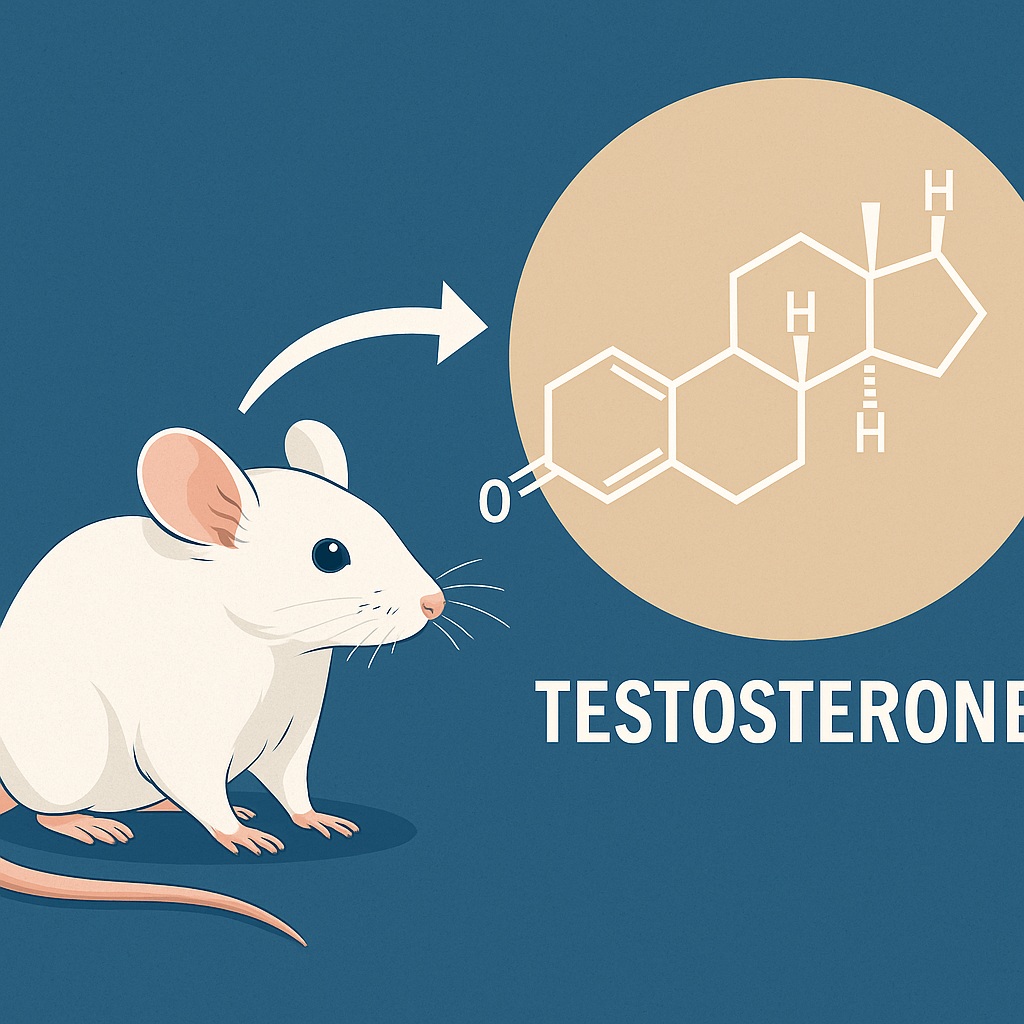
The study upon which this article is based offers a compelling and distinctly modern perspective: testosterone deficiency may contribute directly to priapism pathology, and testosterone replacement may restore essential molecular signaling pathways that suppress spontaneous erections. Using transgenic sickle cell mice, the authors present evidence that testosterone therapy normalizes PDE5 expression, enhances endothelial nitric oxide synthase (eNOS) activity, and significantly reduces the frequency of priapic episodes. Their findings challenge outdated assumptions that testosterone promotes priapism and instead support a sophisticated endocrine–vascular model of penile physiology in SCD.
This article synthesizes the study’s findings into a comprehensive, clinically meaningful narrative. It analyzes the pathophysiology of priapism in SCD, explores the mechanistic links between testosterone and erection-regulating biochemical pathways, reviews the methodological design of the mouse model, and interprets the implications for future human therapies. At the intersection of sexual medicine, endocrinology, and hematology, this study demonstrates that restoring what is deficient—not suppressing what is excessive—is often the most effective therapeutic approach.
Understanding Priapism in Sickle Cell Disease: A Disorder of Dysregulated Relaxation
To appreciate the significance of the study’s results, one must first understand the biological context of priapism in SCD. Contrary to the popular notion that priapism is simply “too much blood in the penis,” SCD-related priapism is actually a failure of detumescence mechanisms, driven by an inability of penile smooth muscle to contract properly after erection. This dysfunction centers on the nitric oxide–mediated signaling system.
In healthy individuals, nitric oxide triggers the production of cyclic guanosine monophosphate (cGMP), causing smooth muscle relaxation and erection. When erection ends, PDE5 hydrolyzes cGMP, restoring basal muscle tone. In SCD, however, chronic hemolysis reduces NO bioavailability and disrupts endothelial signaling. As a result:
- PDE5 expression becomes abnormally low
- cGMP breakdown is impaired
- spontaneous, poorly regulated erections occur
This pathological state yields the paradoxical situation where NO deficiency leads to excessive smooth muscle relaxation, because the system that normally restricts cGMP is nonfunctional.
The authors’ mouse data confirm this mechanism. Penile tissues from SCD mice show decreased PDE5 protein expression and impaired eNOS activity, creating a chemical environment in which spontaneous tumescence becomes more likely. Histological analyses from the study (pages 3–5) show vascular dysregulation consistent with these biochemical abnormalities. In this context, targeting the underlying molecular dysfunction rather than suppressing symptoms becomes an essential therapeutic objective.
Testosterone Deficiency in Sickle Cell Disease: An Overlooked Contributor
The study highlights an underappreciated detail: testosterone deficiency is common in SCD, both in humans and transgenic mouse models. This deficiency arises from a combination of chronic inflammation, oxidative stress, dysfunction of the hypothalamic–pituitary–gonadal axis, and testicular microvascular injury. Historically, clinicians avoided testosterone replacement in men with priapism due to concern that it might worsen spontaneous erections. Yet evidence increasingly suggests the opposite: low testosterone itself may destabilize the penile NO–PDE5 system.
Testosterone regulates expression of both PDE5 and eNOS in vascular tissues, including the penis. Low testosterone reduces PDE5 transcription, weakens endothelial NO production, alters smooth muscle architecture, and contributes to erectile instability. The authors’ baseline measurements confirm that sickle mice exhibit both priapism and significantly reduced testosterone levels compared to control animals.
This observation raises a central hypothesis: restoring testosterone to physiological levels may correct the biochemical deficiencies that lead to priapism, rather than exacerbate the condition.
Study Design: Testosterone Replacement in Transgenic Sickle Cell Mice
The authors employed a well-characterized transgenic sickle cell mouse model (pages 2–4) that reproduces the hemolytic, vascular, and erectile abnormalities found in human SCD. Priapic activity was quantified as the frequency of spontaneous erections, observed during controlled time periods. Testosterone levels were manipulated using subcutaneous testosterone pellets to restore physiologic concentrations.
Analyses included:
- Western blot assays for PDE5 and eNOS expression
- Nitric oxide production measurements
- cGMP concentration analysis
- Histological and morphometric assessment of penile tissue
This multifaceted approach allows for a mechanistic interpretation rather than mere phenomenological reporting.
Testosterone Replacement Reduces Priapic Activity: Key Behavioral Outcomes
One of the study’s most clinically compelling findings is that testosterone replacement significantly reduced spontaneous priapism in sickle mice. Observational recordings indicate a clear decline in the number and duration of spontaneous erections once testosterone levels were normalized (page 6).
The reduction is neither subtle nor superficial—it reflects a meaningful restoration of physiological erection-control mechanisms. Importantly, testosterone did not suppress normal erectile function; instead, it stabilized the system by reinstating appropriate biochemical regulatory pathways. This contradicts long-held assumptions that testosterone inherently increases erection frequency and instead supports the more nuanced understanding that testosterone stabilizes erectile physiology.
These behavioral findings form the foundation upon which the molecular analyses gain significance.
Restoration of PDE5 Expression: Reestablishing Control of Smooth Muscle Relaxation
The hallmark biochemical abnormality in SCD-related priapism is reduced PDE5 expression. Without functional PDE5, cGMP accumulates, and penile smooth muscle remains excessively relaxed.
The study shows that testosterone replacement significantly upregulated PDE5 protein expression in the penis (page 7). PDE5 levels were restored toward normal ranges, matching the physiological degree of expression required to maintain erectile homeostasis.
This finding is not merely correlative; testosterone is known to regulate PDE5 transcription through androgen receptor activation. The return of PDE5 restores the penile tissues’ capacity to hydrolyze cGMP after erection, thereby enabling a healthy detumescence response.
In practical terms:
testosterone gives the penis back its “off switch.”
This explains why testosterone therapy reduces priapism rather than exacerbates it.
Enhancement of eNOS Activity: Recovering Nitric Oxide Signaling
Another central contribution of testosterone is its effect on endothelial nitric oxide synthase (eNOS). In SCD, eNOS expression and activity are profoundly impaired due to hemolysis-induced oxidative stress and vascular inflammation. The result is inadequate NO production and chronic endothelial dysfunction.
The authors provide clear evidence that testosterone increased eNOS phosphorylation and activity in the penis (pages 7–8). Improved eNOS function enhances basal NO bioavailability, thereby restoring normal smooth muscle tone.
The relationship between eNOS and PDE5 is interdependent:
- NO stimulates cGMP production
- cGMP activity requires controlled breakdown by PDE5
- both systems must function for structured erectile response
By improving eNOS function, testosterone restores the “signal” that triggers PDE5 expression and activation. In this way, testosterone acts as a molecular coordinator, aligning both upstream and downstream components of the erectile pathway.
Normalization of cGMP Signaling: The Functional Bridge Between Molecular and Behavioral Improvement
Because PDE5 hydrolyzes cGMP, improved PDE5 expression should theoretically lead to more stable cGMP concentrations. The study confirms this: cGMP levels in testosterone-treated sickle mice were significantly more consistent with physiological norms (page 9).
Stabilizing cGMP restores the proper sequence of events in erection:
- eNOS produces NO
- NO activates guanylate cyclase
- cGMP induces smooth muscle relaxation
- PDE5 terminates the erection by degrading cGMP
In sickle cell priapism, steps 1 and 4 fail. Testosterone treatment restores them both.
This biochemical normalization correlates directly with decreased priapism episodes. It is a rare and elegant example of molecular correction yielding immediate behavioral change.
Histological Insights: Structural Improvement with Testosterone Therapy
Beyond molecular markers, penile tissue morphology offers valuable insight into long-term functional viability. Histological images presented in the study (pages 9–10) show that sickle mice exhibit disrupted cavernosal architecture, reduced endothelial integrity, and abnormal sinusoidal smooth muscle distribution.
After testosterone therapy, tissues demonstrated:
- improved endothelial lining
- normalized sinusoidal structure
- restoration of smooth muscle organization
Although not fully identical to healthy controls, the degree of improvement aligns with enhanced functional stability. This supports the notion that testosterone acts not only as a biochemical modulator but also as a tissue-supportive endocrine factor.
Rethinking Testosterone in SCD: From Caution to Therapeutic Opportunity
Historically, physicians avoided testosterone therapy in SCD patients for fear of inducing priapism. This fear was understandable but based on assumptions rather than mechanistic insight. The present study demonstrates that low testosterone—not high testosterone—is the destabilizing factor in SCD-related priapism.
The implications are profound:
- Testosterone deficiency contributes to impaired eNOS function and low PDE5 expression.
- Restoring testosterone corrects the biochemical basis of priapism.
- Testosterone therapy, when used in physiological doses, may reduce the risk of recurrent priapism.
These findings challenge outdated clinical caution and support renewed investigation into testosterone as part of a multimodal strategy for managing priapism in SCD.
Translational Implications: Can These Findings Apply to Humans?
While mouse models are not perfect analogues of human disease, the molecular pathways involved—NO signaling, PDE5 expression, androgen receptor activity—are highly conserved. Human studies already show high rates of testosterone deficiency in SCD, along with endothelial dysfunction and priapic episodes that mirror the mouse phenotype.
If future clinical trials confirm that testosterone therapy stabilizes erection physiology in men with SCD, it could transform management strategies. Instead of suppressing erections with antiadrenergic medications, clinicians may begin supporting physiological pathways with targeted endocrine therapy.
The study also raises the possibility of combination therapy: testosterone to restore baseline physiology and PDE5 inhibitors to reinforce cGMP regulation. While this seems counterintuitive, dual therapy could theoretically synchronize both sides of the NO–PDE5 system.
The path forward requires careful, phased clinical evaluation, but the conceptual foundation is strong.
Conclusion
The study “Testosterone replacement in transgenic sickle cell mice controls priapic activity and upregulates PDE5 expression and eNOS activity in the penis” reveals a transformative truth: testosterone is not a provocateur of priapism but a stabilizer of erectile homeostasis in the context of sickle cell disease. Through restoration of androgen levels, the researchers successfully corrected the two central defects underlying SCD-related priapism—reduced PDE5 expression and impaired eNOS function.
Testosterone therapy reduced spontaneous erections, normalized NO–cGMP signaling, improved penile tissue structure, and restored essential biochemical pathways. These findings challenge outdated clinical assumptions and provide a mechanistic blueprint for new therapeutic approaches.
In a broader sense, the study exemplifies the importance of endocrine balance in maintaining vascular and sexual health. Rather than suppressing the system, restoring physiological hormone levels may offer the most effective path toward stability.
FAQ
1. Does testosterone replacement worsen priapism in sickle cell disease?
No. This study demonstrates that testosterone reduces priapism by restoring PDE5 and eNOS activity—key regulators of erection termination.
2. Why is PDE5 expression important in preventing priapism?
PDE5 breaks down cGMP, allowing the penis to return to a non-erect state. Low PDE5 leads to uncontrolled smooth muscle relaxation, triggering spontaneous erections.
3. Could testosterone therapy become a clinical treatment for priapism?
Potentially yes. Human trials are still required, but the mechanistic rationale is strong. Testosterone may become part of a physiological, restoration-based treatment strategy.
